Victorian Salvia Study Group
  • Home
    • Contact
      • Nobelius Heritage Park
    • Salvia Library
  • A-Z of Salvias
  • Identification
    • Differences between Microphylla and Greggii Salvias
    • involucrata and karwinskii type Salvias
  • Pruning and Propagating
  • Shop
  • Calendar
  • Membership
  • A
  • Flower of the Day
Victorian Salvia Study Group
  1. Home
  2. Varieties

Varieties

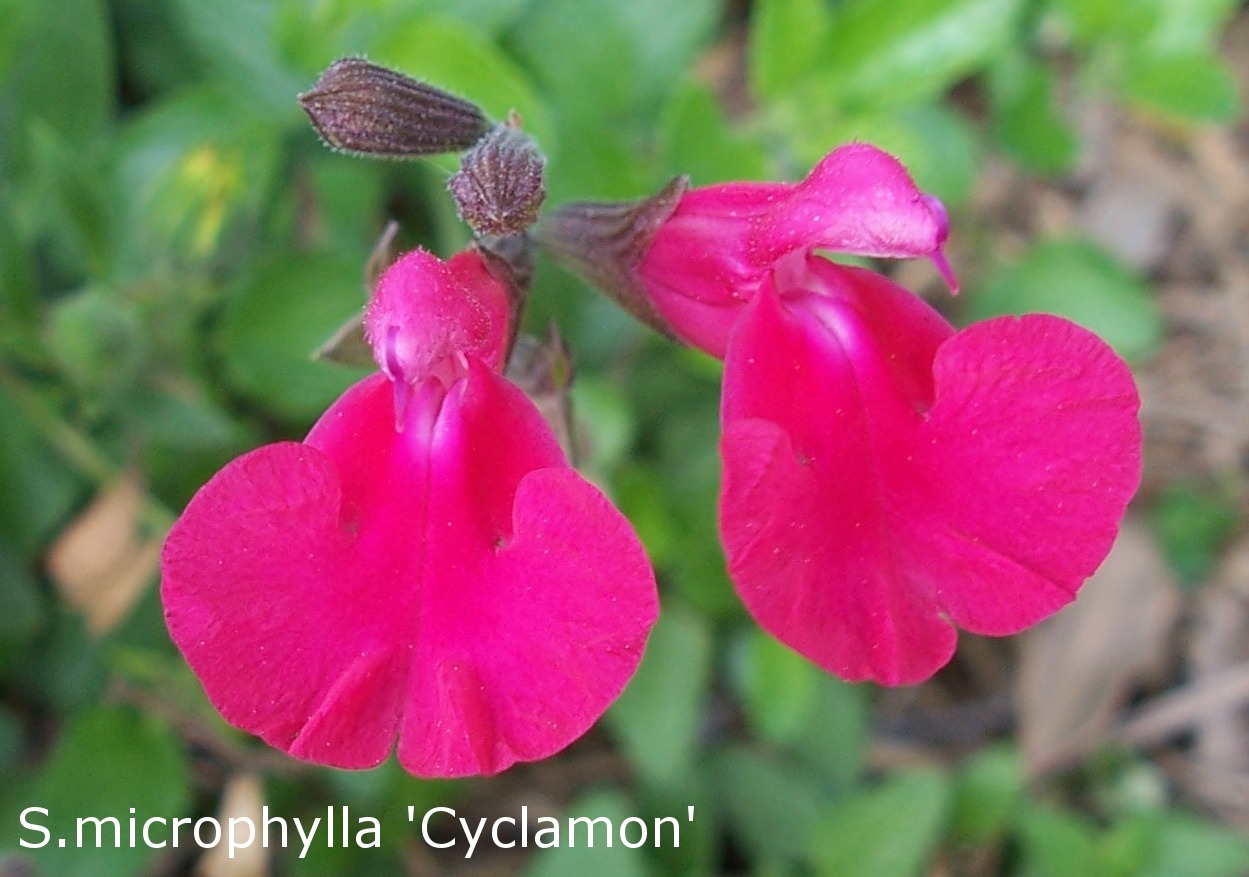
Salvia microphylla 'Cyclamon'

Written on 30 June 2026.

Salvia microphylla 'Cyclamon'

Salvia microphylla 'Cyclamon'

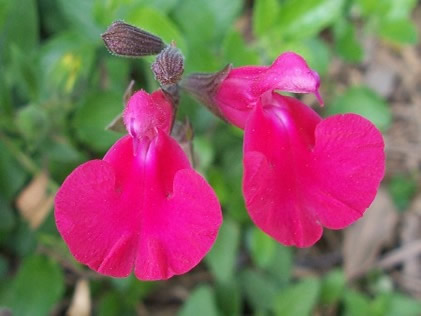
Salvia microphylla 'Cyclamon': is a small shrub 40-60cmH with cyclemon coloured flowers most of the year. The plant has a spreading habit, so is a good filler for a rock bank or side of a slope.

6.9 S.Cyclamon

Salvia microphylla 'Cyclamon' is a lovely sub shrub, flowering most of the year, tough and hardy for summer and winter. This will brighten up a dull corner ofd the garden. An easy plant to grow in a full sun position. Not fussed with soil, clay or sand, but should have good drainage.

Propagation: usually by tip cuttings, taken any time of the year or by dividing the clump into smaller pieces or if the plant is beginning to spread, then take out rooted pieces to pot up.

  • Hits: 12

Written on 03 August 2026.

Salvia superba 'Bouquetta'

  • MultiCategories: Seed, Flower of the Month, New Salvias, Salvias not readily available, Salvias Collection, Bushy Shrub

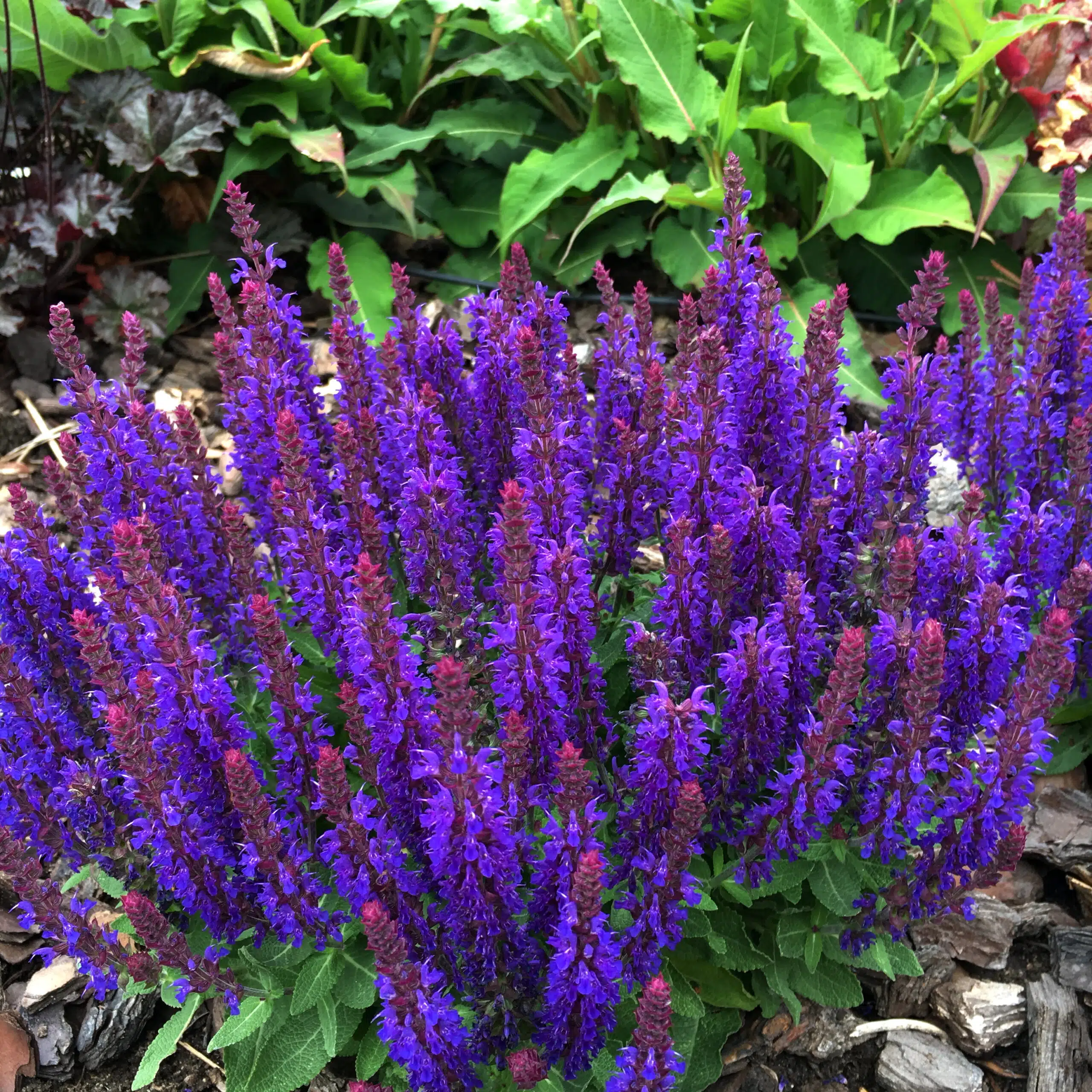
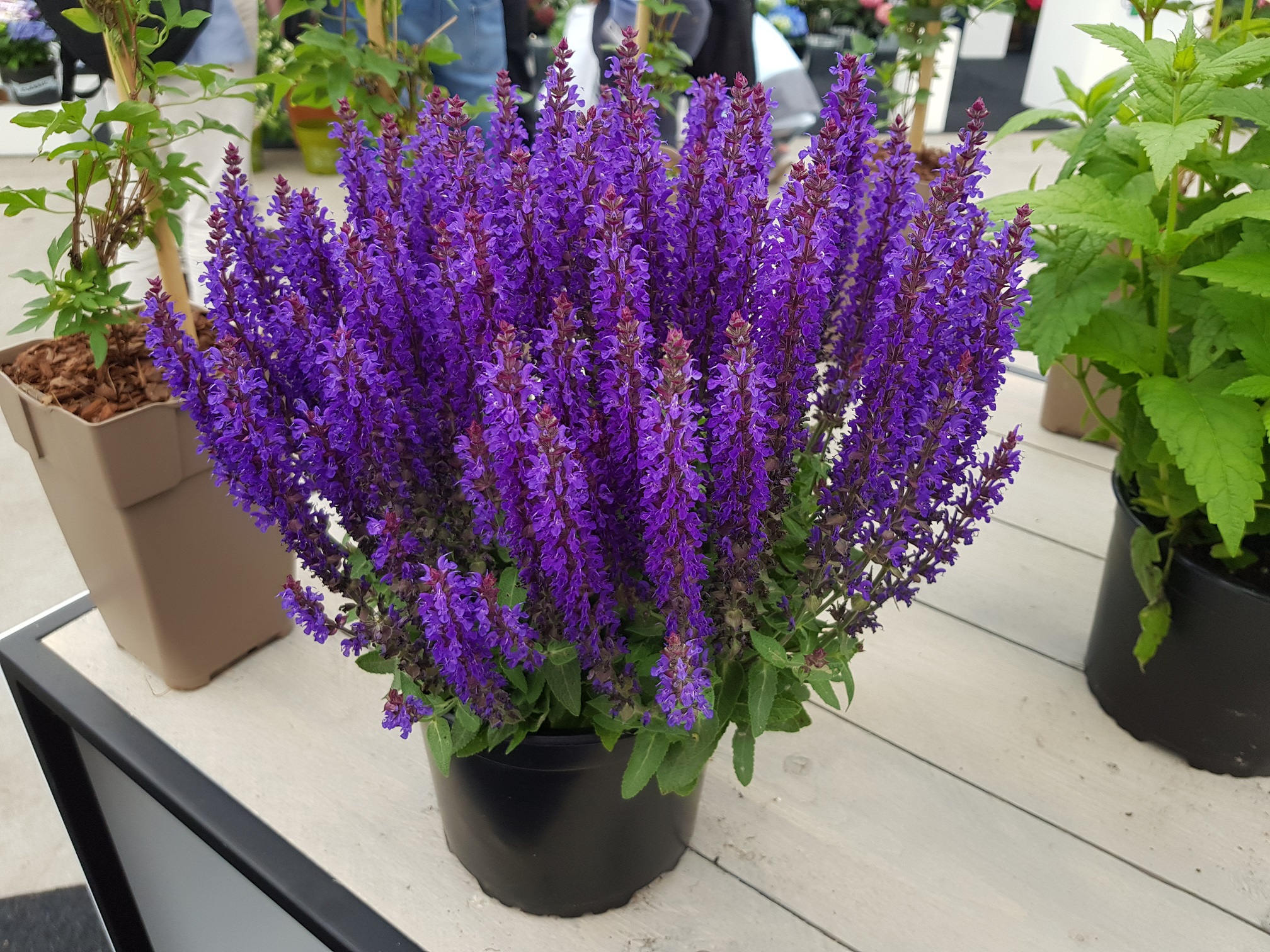
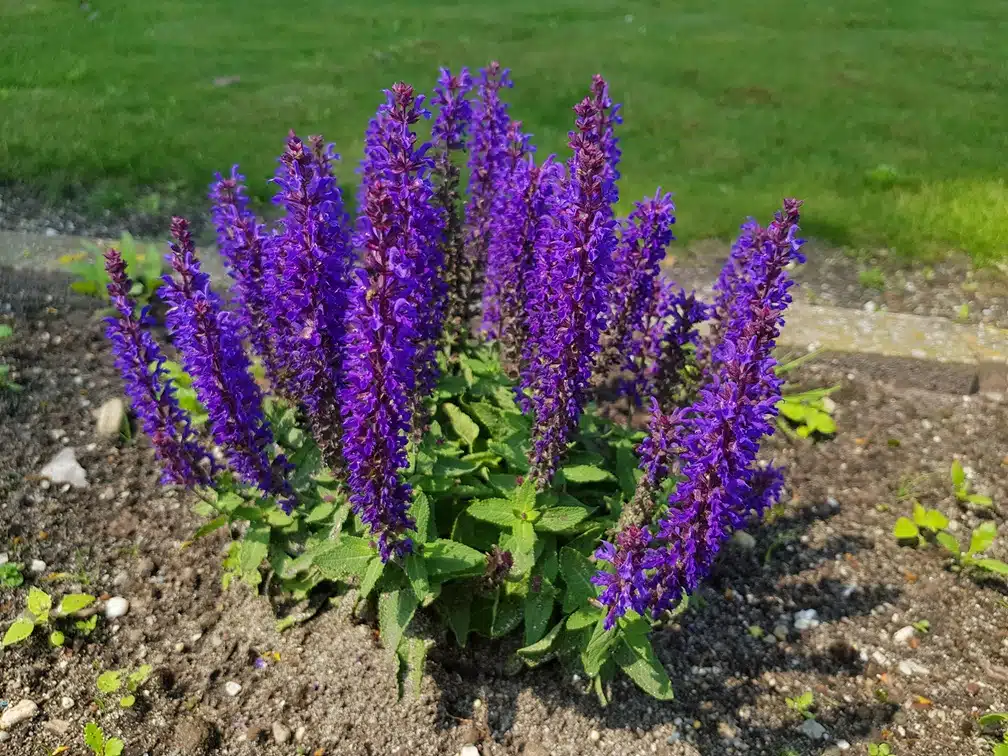
Salvia superba 'Bouquetta'; is a low herbaceous plant producing a clump of basal leaves and vivid purple spikes of flowers in spring. Plant in a sunny position.


Blue Bouquetta 01 scaled


Salvia superba 'Bouquetta'; is a low herbaceous plant producing a clump of basal leaves and vivid purple spikes of flowers in spring. Plant in a sunny position.

Salvia superba 'Bouquetta' makes an outstanding plant when out in full flower

Flowers: are a small falcate type flower. A magnificent vivid purple in colour with a curved or straight hood and very prominent white stigma extending out from the tip. All three bottom lobes are the same colour purple with only a small lighter patch around the throat, acting as a beeline to entice bees and other pollinating insects to explore further down the tube.

Flowers are in tight whorls of 6 flowers around a coloured stem.The flower stem is approx 15cm long with numerous whorls tightly packed. Open flowers at the bottom and ascending to the tip with more buds waiting to open once the bottom few have finished, thus continuing the flowering period for some weeks and months.

Buds begin to appear shortly after the clump of rosette leaves have emerged. Multiple flower stems appear in mid spring, coming into full flower in late spring and continue through out the summer months, making a magnificent display of purple spikes of flowers.
Flowers are held well above the foliage to attract passing insects. So often, these densely packed flower stems are buzzing with bees.

Calyces: these are small, being a dark pink colour along the ribs, each lobe is small but pointed with the same coloured small triangular bract beneath each whorl, giving the whole stem a more intense colour sensation. The top buds are pink, giving a nice contrast to the darker bracts and purple flowers.
When the flowers have finished, both the flowers and bracts will fall off. If pollinated the calyces will remain, becoming a straw colour, which will remain until knocked off full of seed.

Leaves: are small, broad lanceolate, mid green with a pointed tip. Leaves have a mild fissured texture, being able to direct any moisture towards the stem and down to the root area. Leaves have fine rounded crenulations around the edges. Although the basal leaves are long, there are only two sets of small sessile stem leaves along the flowering stem before the flowers begin.

Blue BouquettaSalvia superba 'Blue Bouquetta'

Blue Bouquetta 05Salvia superba 'Bouquetta'


Salvia superba 'Bouquetta' makes a stunning display in either pots on the patio or planted in the garden.

This plant really makes a wonderful display planted as a border or en masse in a sunny position. Plant with other vividly coloured small shrubs and perennials with deep crimsons, whites to act as a foil or even bright yellows and oranges to add a lovely contrast. These vivid coloured plants will really brighten up any garden bed to become a show stopper.

Once established, S.'Bouquetta' will be tough and hardy plant through the summer months, especially if mulched. Not fussed about the soil, provided it is well drained.

Maintenance: As this plant is herbaceous,( winter dormant), when it will begin to go down  for winter, clean away old leaves, cut down any flowering stems by half,to act as markers when completely gone. These will prevent the crowns from being accidentally dug up or trodden upon. Mulch over the crowns to keep the root area warm during the winter months.

Just before the leaves begin to appear, feed well to give both the leaves and flower stems a boost. Top up the mulch for the coming dry summer season.

Propagation: seed is usually a good way to produce a lot of plants quickly - sow in late winter on a heated bed to get a good start for the new season. Cuttings can be taken when the leaves are advances and stems have 2-3 nodes, these are then treated like other cuttings, placed into a perlite mix until rooted. Slips can be found with new side growth. Try to get some roots with the slip, these should be treated as cuttings and placed into a perlite mix until enough roots have been produced and can be potted up.

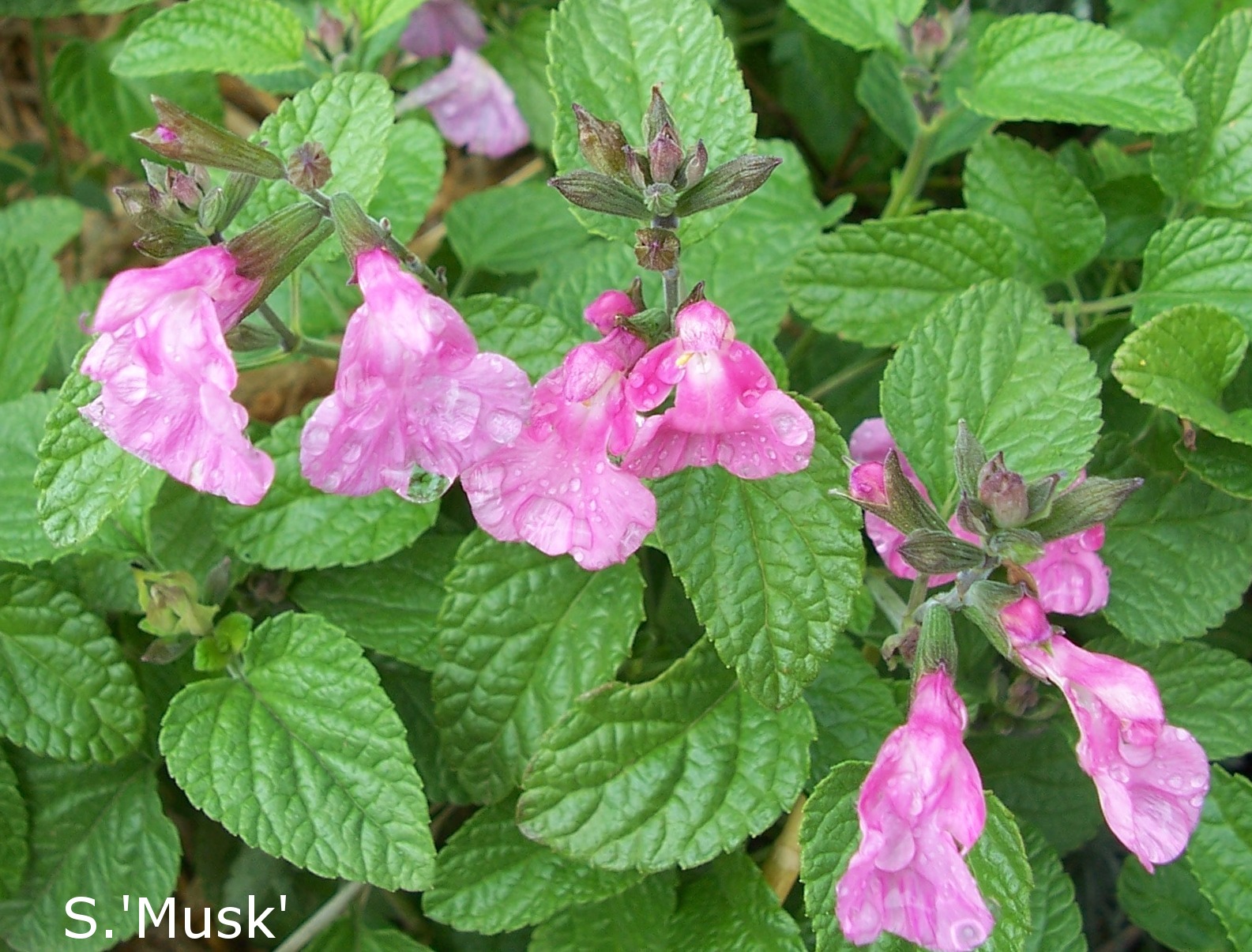
Wed9.9S.Musk


Not readily available 


  • Hits: 2

Written on 21 July 2026.

Salvia  ‘Adriana’s Jewel’

  • MultiCategories: Flower of the Month, Salvias Collection, 2 Toned Flowers ( cream & pink)( red & white), Bushy Shrub, Crimson Flowers, Frost Hardy Salvias, Full Sun, greggii varieties, greggii-x-microphylla

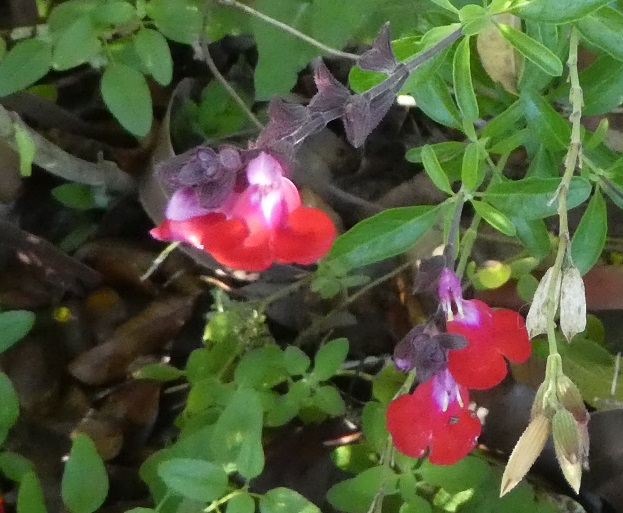
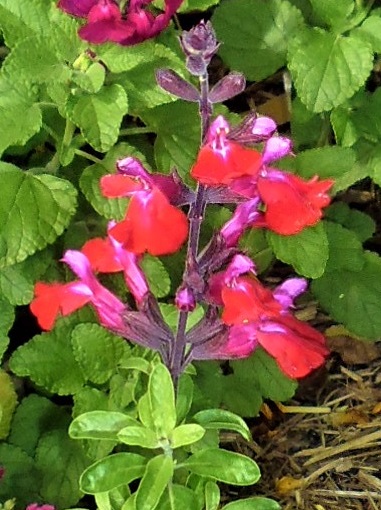
Salvia ‘Adriana’s Jewel’  is a small greggii type Salvia which performs beautifully most of the year with these amazing 2 toned red flowers.

Adrianas Jewel 1

Salvia ‘Adriana’s Jewel‘ is indeed a jewel to have in the garden with those 2 toned red flowers .

Flowers:  are primarily red, but have a 2 tone appearance.

The hood and tube are a lovely pink colour, with the bottom lobes being a wonderful red colour. Often the top part of those lobes can also be pink, giving it an extra dimension. The throat area has a definite white patch, which helps guide the bees and other pollinating insects further into the flower.

Once in flower, this small shrub will continue to flower for most f the year, until clipped down to clean out or shape. All flowers are held above any foliage to attract any passing insects.

Calyces: are a dark crimson, with short pink hairs. Lobes are well ribbed  and very pointed with a soft tip. They seem to drop off after the flower has finished. Even the flower stem is coloured.

Leaves: are oblong with a rounded tip, looking more like a greggii shaped leaf with the midrib showing and nothing else. The edges are more or less entire with only one or two notches showing.

All the stems are well clothed with leaves. The shrub usually only grows from1 stem, making a nice bushy shrub.

Adrianas Jewel 1 Adrianas Jewel May 23 Adrianas Jewel Oct 21

Salvia  ‘Adriana’s Jewel’. is a gorgeous small shrub for any garden, to brighten up a dull corner. Plant it in the forefront of a bed or in a cluster of 3-5 plants to really make a show. It would also do well in a mixed border with other contrasting shrubs and perennials, such as deep blues and purples. A lovely offset to a showy white perennial or a lovely contrast to a patch of pale pink groundcovers.

Grow in full sun, it’s not fussed about the soil, proving  very hardy for the summer season and tolerating a light frost.

Having flowers over a long period in a bonus to any garden, especially in winter,  providing food for  bees and moths which love visiting this shrub.

Maintenance: As the plant flowers over a long period, it’s best to trim in the summer months for shape, then in winter or colder months, cut back to clean up the shrub, cut out any dead or twiggy stems. Once cleaned up, it won’t take long before it’s back into full leaf again and beginning to flower in late winter early spring.

Feed well and mulch to keep the roots cool in the hot dry summer season and warm in the cold months. In spring, feed well and mulch to keep the roots cool in the summer season.

Propagation: Tip cuttings of new growth is advisable, taken when new shoots appear in spring, before the flower buds appear. But generally tip cuttings can be taken at most times of the year.


  • A
  • Hits: 17

Written on 30 June 2026.

Greggii & Microphylla Hybrids

  • MultiCategories: Salvia patens Front Page, Identification

This is a listing of only  greggii & microphylla hybrids that we know about in Australia, that have been named, propagated and promoted.

Salvia 'Tangerine'(greggii)

Salvia ‘Tangerine’ ( greggii)

The list is be divided into two lists .

  1. Those hybrids that are currently being propagated and promoted and Those hybrids that have been found in gardens, they may be named but are not being propagated or promoted, as well as those hybrids that are no longer in favour – no longer being propagated in any quantities. This list may vary from time to time

Plants will be listed as a greggii or if a cross, this will be shown asg x m if a hybrid . This shows that the plant has a greggii dominant parent. Other names will assume to be a microphylla.

As microphylla’s cross within them selves, they can create a wonderful array of leaf shapes. Most  will appear with their hybrid name, indicating that the plant is a microphylla.

Most of these hybrids grow 40-60cm H  with the occasional plant growing to 80 H, they all love a full sun position. Most plants are low growing for the  front of the bed.

All greggii/ microphylla hybrids love full sun, some can grow well in filtered sun, but do better in a sunny position. Most plants are low growing  (approx 40cmH) and are ideal for the front of a garden bed.

It is best to prune about twice a year or when beginning to get leggy and straggly – prune down to a green bud. All need feeding through out the year, all grow better when watered ( if available) Mulch well to keep roots cool.


  • Hits: 8

Subcategories

Member Login

  • Forgot your password?
  • Forgot your username?

Latest Events

View Full Calendar
03 Jul 2026;
10:00AM - 03:00PM
Gardening Day
03 Aug 2026;
10:00AM - 03:00PM
Gardening Day
02 Sep 2026;
10:00AM - 03:00PM
Gardening Day
27 Sep 2026;
11:30AM - 05:00PM
Visit Ailsa Hemphill's gorgeous flower garden
03 Oct 2026;
10:00AM - 04:00PM
Bolobek Garden Fair
03 Oct 2026;
10:00AM - 03:00PM
Gardening Day
02 Nov 2026;
10:00AM - 03:00PM
Gardening Day
03 Dec 2026;
10:00AM - 03:00PM
Gardening Day

Contacts


Contact Us

(Click on the name of the person you'd like to contact)

Co-ordinator: Lyndi Garnett

Membership Officer: Laurie Norman

Newsletter Editor: Andreina Chinn

Facebook Manager: Julie Kavanagh


Our Acceptable Usage Policy

Our Privacy Policy

© 2026 Victorian Salvia Study Group

Contact us at: info@salvias.org.au

  • Home
    • Contact
      • Nobelius Heritage Park
    • Salvia Library
  • A-Z of Salvias
  • Identification
    • Differences between Microphylla and Greggii Salvias
    • involucrata and karwinskii type Salvias
  • Pruning and Propagating
  • Shop
  • Calendar
  • Membership
  • A
  • Flower of the Day